Live Kīlauea Volcano Webcams
Live cam feeds from the USGS Hawaiian Volcano Observatory at Kīlauea, on Hawaiʻi Island
Still images, not videoRefreshed every ~45 secondsSource: USGS/HVO
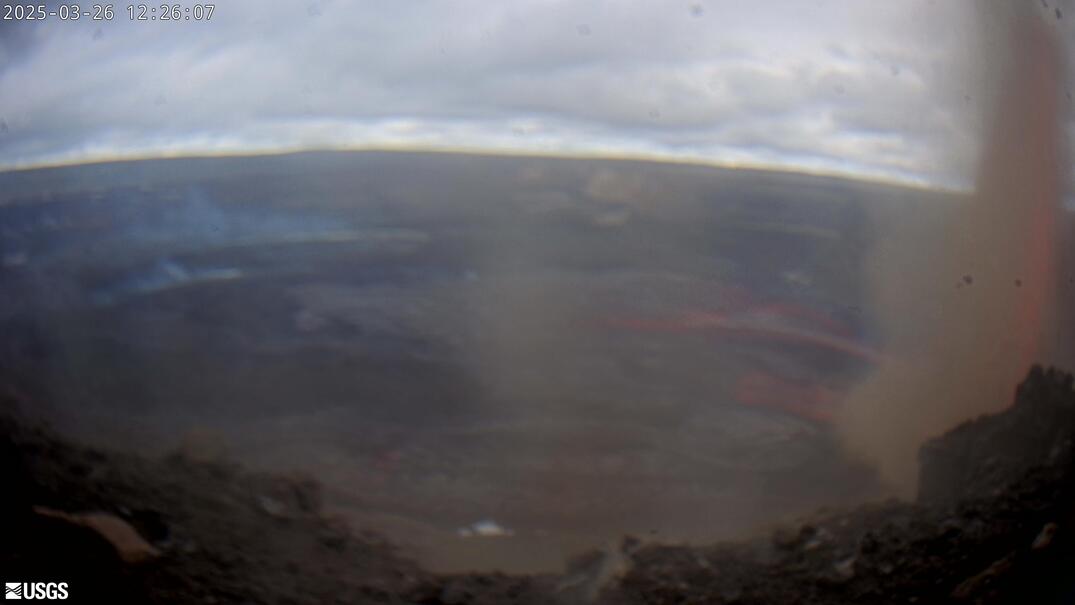
Halemaʻumaʻu Panorama (West Rim)
Wide panorama of Halemaʻumaʻu from the west rim of Kīlauea caldera, looking southeast
The widest visible-light view of the crater floor. The dark plain filling the frame is cooled lava from previous episodes, and the vents sit toward the near side. Because it is a panorama, individual features look small, but you get the whole crater in one frame.
When to look: Start here. If something is happening anywhere in Halemaʻumaʻu, this frame shows you where, and you can then switch to a tighter camera for detail.
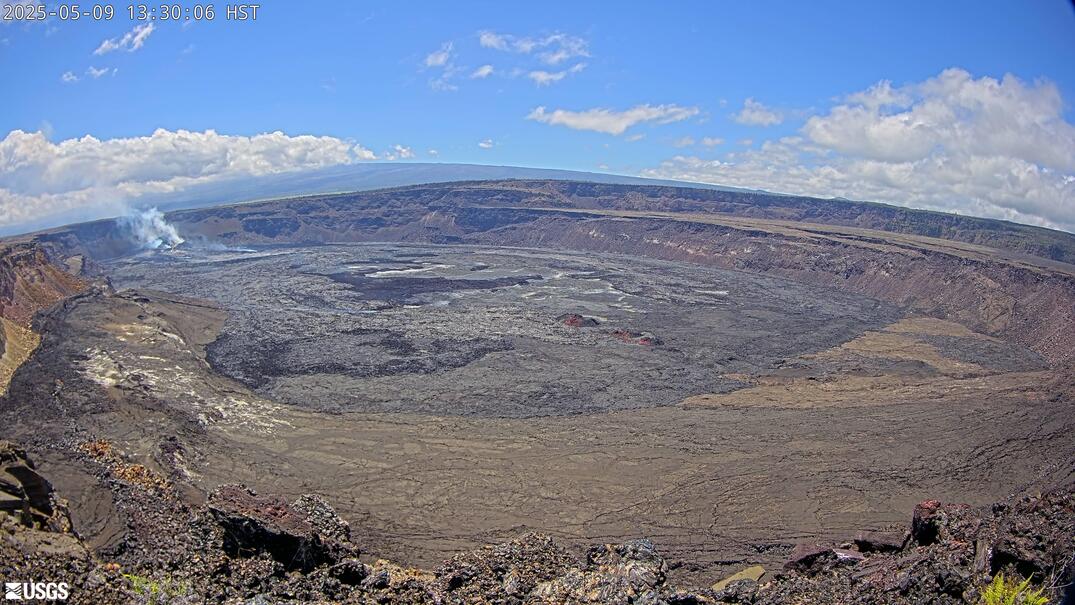
Caldera and Down-Dropped Block (East Rim)
Down-dropped block and Halemaʻumaʻu from the east rim of the caldera
The stepped terrace in the middle distance is the down-dropped block, a slab of caldera floor that dropped during the 2018 summit collapse. Halemaʻumaʻu is beyond it. This is the view that shows how much the caldera changed in 2018.
When to look: Good for scale and geology rather than action. Looking from the east means you are usually looking with the trade winds rather than into them, so the plume tends to blow away from this camera instead of across it.
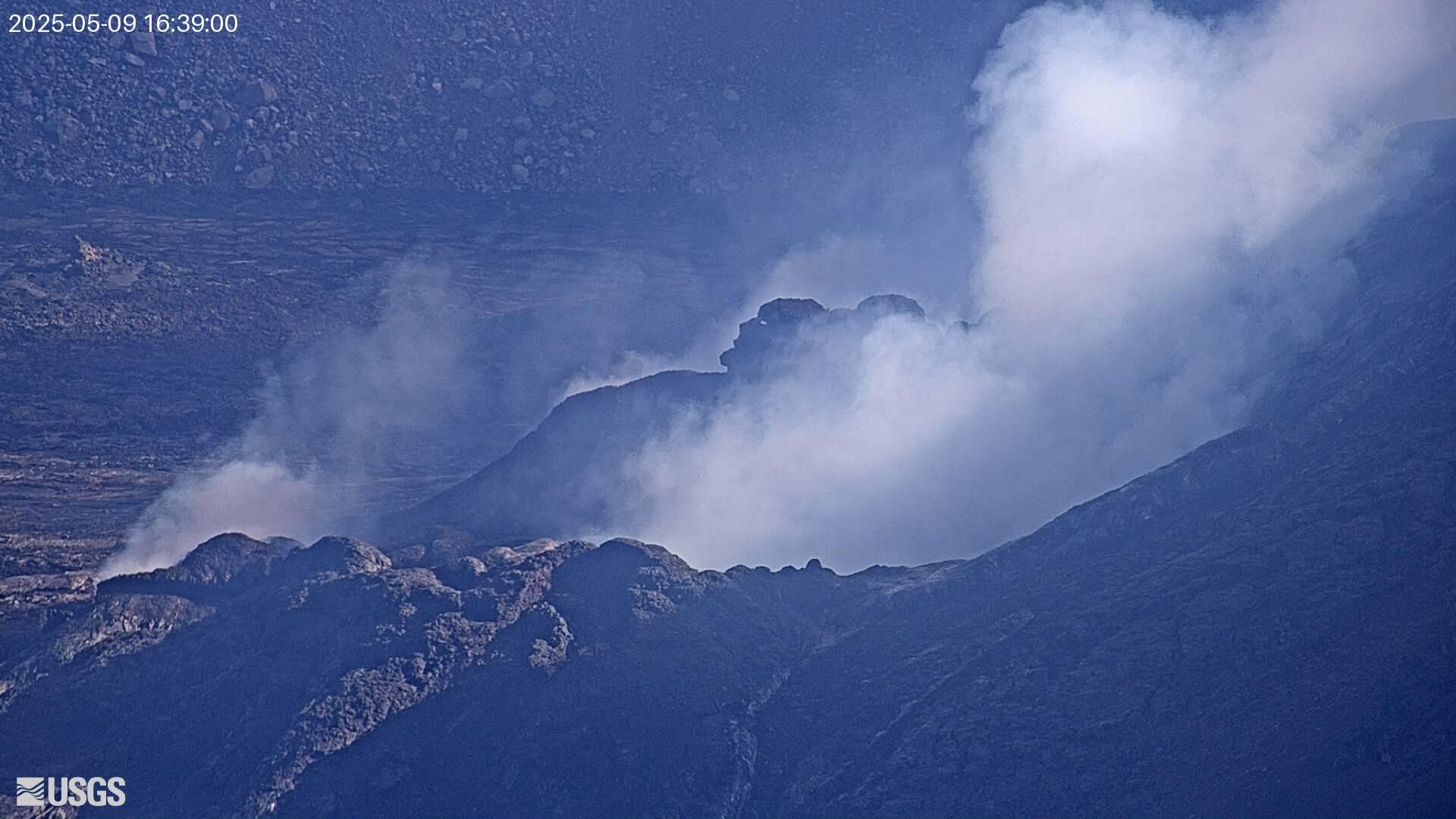
Halemaʻumaʻu Close View (Northwest Rim)
Halemaʻumaʻu crater from the northwest rim, pan-tilt-zoom
The tightest routine view of the active vent area. This one is a pan-tilt-zoom camera, so HVO re-aims it as activity moves. If the framing looks different from the last time you checked, the camera moved, not the volcano.
When to look: During an episode. This is where fountain shape, spatter, and the edge of the flow field are actually legible instead of being three pixels wide.
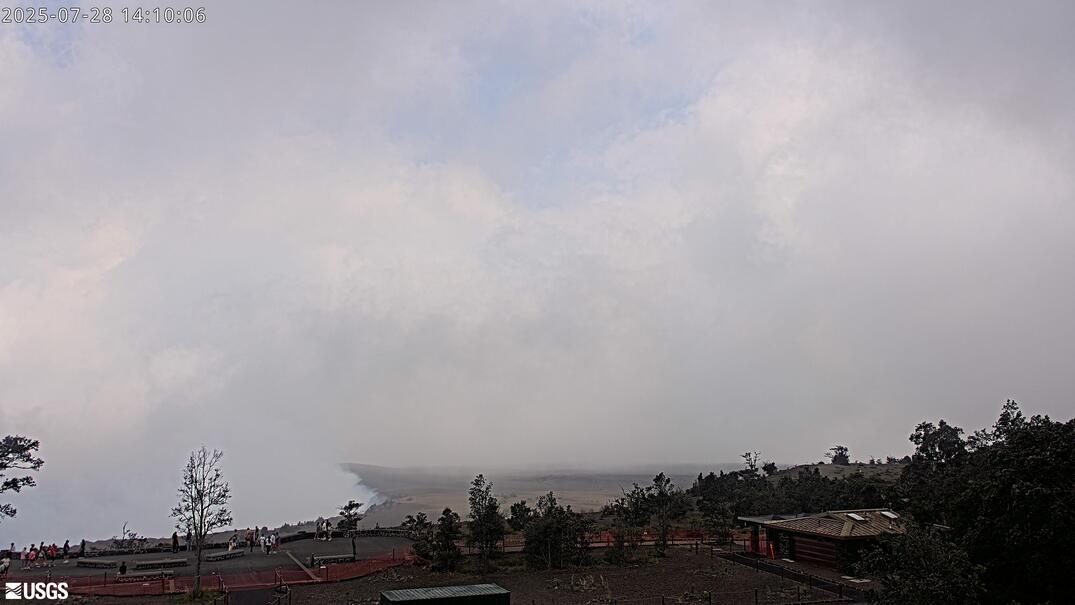
Kīlauea Caldera from Uēkahuna
Kīlauea caldera from Uēkahuna bluff
The high overlook view from Uēkahuna bluff, the former observatory site on the caldera rim. This is closest to what you would see standing at a public overlook, which makes it the best preview of whether a drive up is worth it.
When to look: Before you leave for the park. If this frame is a wall of grey, the overlooks are fogged in and you will see the same wall of grey in person.

Halemaʻumaʻu from the South
Halemaʻumaʻu from the south side of the crater
The opposite side of the crater from most of the other cameras, so features that hide behind a rim edge elsewhere can be visible here. Cross-checking two angles is often what settles whether a bright patch is a vent or a reflection.
When to look: When the northwest cameras are plumed out. The gas does not blow in every direction at once, so a camera on the far side sometimes has clear air when the others do not.
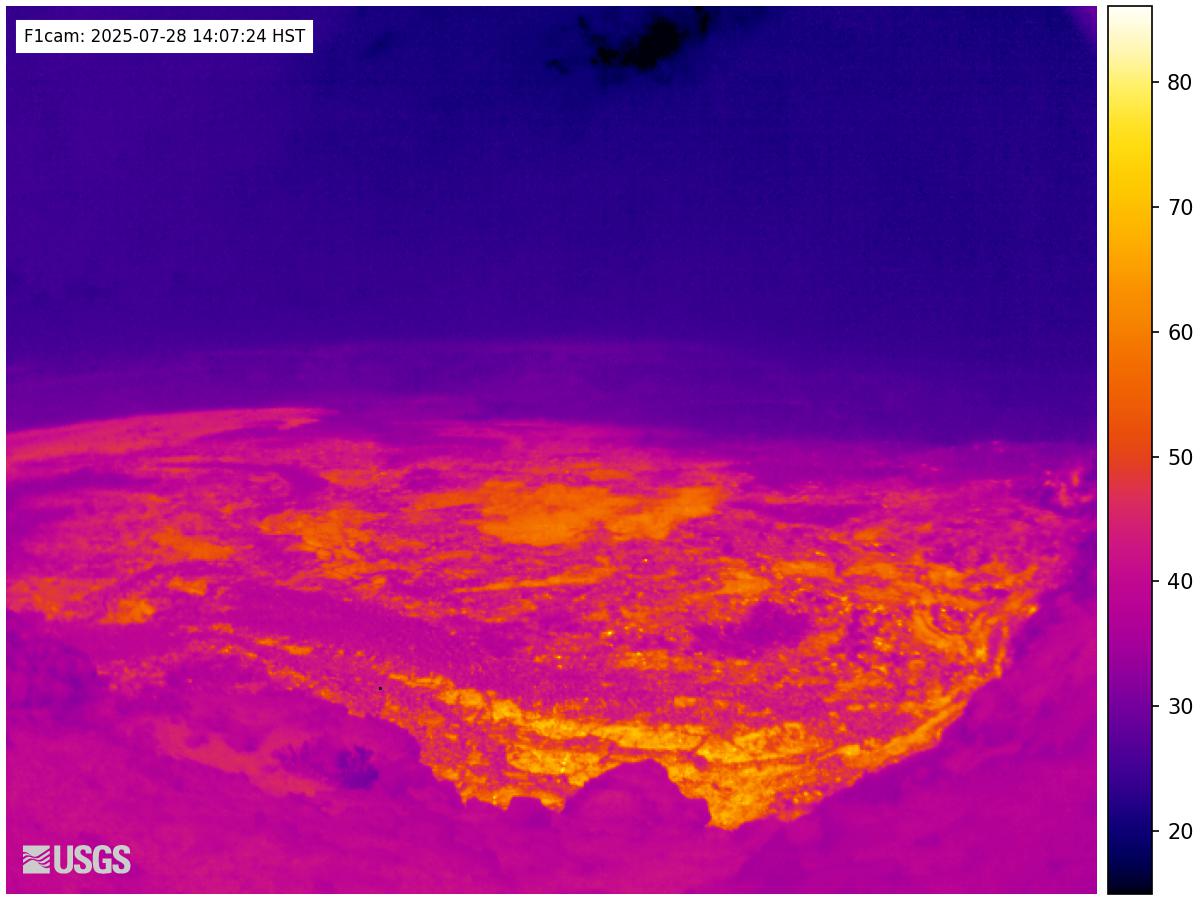
Thermal Camera, Halemaʻumaʻu
Halemaʻumaʻu thermal image from the west rim, looking southeast, pan-tilt-zoom
Not a photograph. This camera maps temperature, with hot surfaces rendered bright and cold ones dark, so the picture looks like an X-ray of the crater floor. Active lava reads as white or near-white. Crust that erupted a week ago still reads warm grey.
When to look: Whenever the visible cameras are useless, which is often. Thermal imaging sees through volcanic gas and works in complete darkness, so this is the camera that answers whether anything is erupting when everything else is black or white.
Tours & booking
🚁 Seen enough to go?
Going anyway? A helicopter buys the one angle no overlook has: straight down into Halemaʻumaʻu.
Plan the drive yourself: the park guide
Up there you'll see what the cams show now. No flight buys a fountain.
Tour links are affiliate links to Viator; we may earn a commission at no cost to you.
HOW TO READ THESE FEEDS
Why the summit camera is black at night
The visible-light cameras run around the clock, and USGS is explicit that they faithfully record the dark of night when there is nothing incandescent in frame. There are no floodlights at Halemaʻumaʻu. Nobody is going to install any. So between eruptive episodes, a night frame is genuinely, correctly black. It is not a broken feed.
That has a useful consequence. At night the camera stops showing you the crater and starts showing you only what is hot enough to glow. Any orange in a night frame is molten or very recently molten rock, with no rock color, shadow, or cloud to confuse it. A night check is often a faster answer than a daytime one, where a dark vent against dark lava is easy to miss.
The thermal camera is the exception and does not care about daylight at all. It maps heat, so it produces the same readable image at 3 a.m. as at noon.
Telling active fountaining from leftover glow
This is the question these feeds get used for most, and a single still image cannot answer it. A cooling lava surface stays hot enough to glow for a long time after the fountain stops, so "there is orange in the frame" is not the same as "it is erupting." Four things separate them:
- Movement between frames. Fountaining changes shape every few seconds. Residual glow looks nearly identical across two refreshes. Hit refresh, wait, hit it again, and compare. If the bright area has the same outline both times, nothing is erupting.
- Brightness and color. An active fountain overexposes the sensor and blows out to white or yellow-white at the core. Cooling crust glows a duller red or deep orange, and it fades toward the edges rather than having a hard bright center.
- The plume. Sustained fountaining drives a large gas and tephra plume that is obvious in daylight and lit from below at night. Glow with no plume above it is almost always a cooling surface.
- The thermal frame. The tiebreaker. Active lava saturates the thermal camera to near white in a compact area. Recently erupted crust reads as a broad warm grey patch with no white core. If the thermal image is warm everywhere and bright nowhere, the episode is over.
Cross-check against the live status page before concluding anything. USGS states plainly whether an episode is underway, and a webcam is a slower way to learn the same thing.
A grey or white frame is usually weather
Kīlauea's summit sits around 4,000 feet on the wet side of the island, and cloud sits on it for large parts of most days. A featureless pale frame is nearly always fog, rain on the lens, or the eruption plume drifting across the line of sight. All three clear on their own, often within the hour.
When that happens, switch cameras rather than waiting. The cameras sit on different sides of the crater, so a plume blowing across one is frequently blowing away from another, and the thermal camera sees through volcanic gas that stops the visible-light ones. If every camera is white at once, that is real weather, and the overlooks will look the same in person.
These are stills, not video
Each panel above is a single JPEG that USGS republishes on its own schedule. This page requests a fresh copy roughly every 45 seconds, which sets how often you can see a change, not how often the volcano is photographed. A timestamp that has not moved usually means USGS has not posted a newer frame yet.
Two of these cameras pan, tilt, and zoom, and HVO re-aims them as activity shifts. A framing that suddenly looks unfamiliar is a camera move rather than a change on the ground. The cameras also break, sit on a remote caldera rim, and are not always fixed quickly. One dead panel is normal. Six would be notable.